Kamis, 27 Januari 2011

[K951.Ebook] Get Free Ebook Painting the Heavens, by Eileen Reeves

Get Free Ebook Painting the Heavens, by Eileen Reeves

By visiting this page, you have actually done the ideal staring factor. This is your beginning to choose the e-book Painting The Heavens, By Eileen Reeves that you desire. There are bunches of referred books to review. When you desire to obtain this Painting The Heavens, By Eileen Reeves as your book reading, you could click the link page to download and install Painting The Heavens, By Eileen Reeves In couple of time, you have actually owned your referred books as your own.

Painting the Heavens, by Eileen Reeves

Painting the Heavens, by Eileen Reeves


Painting the Heavens, by Eileen Reeves

Get Free Ebook Painting the Heavens, by Eileen Reeves

Recommendation in selecting the best book Painting The Heavens, By Eileen Reeves to read this day can be obtained by reading this resource. You can discover the best book Painting The Heavens, By Eileen Reeves that is marketed in this globe. Not just had the books published from this country, however additionally the other nations. As well as currently, we suppose you to review Painting The Heavens, By Eileen Reeves as one of the reading products. This is just one of the best publications to collect in this website. Take a look at the resource and also browse the books Painting The Heavens, By Eileen Reeves You can find bunches of titles of the books given.

If you obtain the printed book Painting The Heavens, By Eileen Reeves in on the internet book shop, you might also discover the same issue. So, you must move shop to establishment Painting The Heavens, By Eileen Reeves and look for the offered there. However, it will certainly not take place right here. The book Painting The Heavens, By Eileen Reeves that we will certainly provide right here is the soft data idea. This is what make you can quickly discover as well as get this Painting The Heavens, By Eileen Reeves by reading this website. We provide you Painting The Heavens, By Eileen Reeves the best item, always as well as always.

Never ever question with our deal, due to the fact that we will constantly offer exactly what you need. As like this updated book Painting The Heavens, By Eileen Reeves, you may not find in the various other area. Yet below, it's extremely simple. Just click and download and install, you could have the Painting The Heavens, By Eileen Reeves When simplicity will reduce your life, why should take the complicated one? You could purchase the soft data of the book Painting The Heavens, By Eileen Reeves here as well as be member people. Besides this book Painting The Heavens, By Eileen Reeves, you could likewise discover hundreds lists of the books from lots of sources, compilations, authors, and writers in around the world.

By clicking the link that we offer, you could take guide Painting The Heavens, By Eileen Reeves completely. Attach to web, download, and also conserve to your tool. Just what else to ask? Reading can be so simple when you have the soft file of this Painting The Heavens, By Eileen Reeves in your device. You can likewise copy the data Painting The Heavens, By Eileen Reeves to your workplace computer or in your home as well as in your laptop. Merely discuss this good news to others. Recommend them to visit this page as well as get their hunted for books Painting The Heavens, By Eileen Reeves.

Painting the Heavens, by Eileen Reeves


The remarkable astronomical discoveries made by Galileo with the new telescope in 1609-10 led to his famous disputes with philosophers and religious authorities, most of whom found their doctrines threatened by his evidence for Copernicus's heliocentric universe. In this book, Eileen Reeves brings an art historical perspective to this story as she explores the impact of Galileo's heavenly observations on painters of the early seventeenth century.


Many seventeenth-century painters turned to astronomical pastimes and to the depiction of new discoveries in their work, yet some of these findings imposed controversial changes in their use of religious iconography. For example, Galileo's discovery of the moon's rough topography and the reasons behind its "secondary light" meant rethinking the imagery surrounding the Virgin Mary's Immaculate Conception, which had long been represented in paintings by the appearance of a smooth, incandescent moon. By examining a group of paintings by early modern artists all interested in Galileo's evidence for a Copernican system, Reeves not only traces the influence of science on painting in terms of optics and content, but also reveals the painters in a conflict between artistic depiction and dogmatic representation.


Reeves offers a close analysis of seven works by Lodovico Cigoli, Peter Paul Rubens, Francisco Pacheco, and Diego Vel�zquez. She places these artists at the center of the astronomical debate, showing that both before and after the invention of the telescope, the proper evaluation of phenomena such as moon spots and the aurora borealis was commonly considered the province of the painter. Because these scientific hypotheses were complicated by their connection to Catholic doctrine, Reeves examines how the relationship between science and art, and their mutual production of knowledge and authority, must themselves be seen in a broader context of theological and political struggle.


  • Sales Rank: #4284948 in Books
  • Brand: Brand: Princeton University Press
  • Published on: 1999-09-27
  • Original language: English
  • Number of items: 1
  • Dimensions: .84" h x 6.15" w x 9.22" l,
  • Binding: Paperback
  • 320 pages
Features
  • Used Book in Good Condition

Review

One of Choice's Outstanding Academic Titles for 1998


"Fascinating, densely argued.... Eileen Reeves constructs a minutely researched case for the interplay of science and art."--Ann Geneva, Financial Times


"Reeves's elegantly written and exhaustively documented book reveals just how profoundly the great astronomer [Galileo] was involved in the artistic milieu of his native Florence.... Reeves offers much rich new detail."--Samuel Y. Edgerton, Nature


"This is a rich, rewarding book in its analysis of art, history of astronomy, and the interaction of religion and science."--Alan E. Shapiro, Isis


"Reeves's extensive and detailed research reveals how much scientific matters were intertwined with religious beliefs, further illuminating the climate of Galileo's polemics. This is a fascinating and important book for scholars and advanced students."--Choice


"This book is a very enjoyable read. The effortless prose unrolls the extremely complex subject matter so beguilingly that before you know where you are, you have reached the end of the book. The scholarship is lightly worn, but deeply impressive. . . Eileen Reeves masterly command of primary sources and beautiful writing style beckon the reader through some very intricate problems, lucidly explained."--The Observatory

From the Back Cover

"Painting the Heavens is a joy to read. It is beautifully written, with clarity, graceful style, and subtle wit. It will be a revelation to historians of science and art, and should also be of great interest to students of Italian cultural history and the Counter Reformation."--Noel M. Swerdlow, The University of Chicago


About the Author
Eileen Reeves is Assistant Professor of Comparative Literature at Princeton University. She specializes in seventeenth-century scientific literature.

Most helpful customer reviews

1 of 2 people found the following review helpful.
Painting the Heavens
By Gary D. Rosenberg
Eileen Reeves has created a portrait of Galileo the artist-scientist that is complex and and worth a long look. I was not familiar with Galileo the artist, and her story includes memorable tidbits that add another dimension to his life. For example, Galileo's dislike of pietre dure, or portraits that were mosaics of polished minerals, and his study of the illumination of the Moon convincingly show that Galileo had an artistic sensibility that influenced his scientific observations. Reeves conclusions may be stretched, but they are worthwhile debating. The writing is not easy, the book wanders and is repetitious, but a careful read will pay off with a new understanding of a giant of the Renaissance and subsequent Scientific Revolution.

See all 1 customer reviews...

Painting the Heavens, by Eileen Reeves PDF
Painting the Heavens, by Eileen Reeves EPub
Painting the Heavens, by Eileen Reeves Doc
Painting the Heavens, by Eileen Reeves iBooks
Painting the Heavens, by Eileen Reeves rtf
Painting the Heavens, by Eileen Reeves Mobipocket
Painting the Heavens, by Eileen Reeves Kindle

Painting the Heavens, by Eileen Reeves PDF

Painting the Heavens, by Eileen Reeves PDF

Painting the Heavens, by Eileen Reeves PDF

Sabtu, 15 Januari 2011

[F938.Ebook] PDF Download Mozart: The Early Years, 1756-1781, by Stanley Sadie

PDF Download Mozart: The Early Years, 1756-1781, by Stanley Sadie

Make use of the advanced innovation that human creates today to locate the book Mozart: The Early Years, 1756-1781, By Stanley Sadie quickly. Yet first, we will certainly ask you, how much do you like to check out a book Mozart: The Early Years, 1756-1781, By Stanley Sadie Does it always up until surface? Wherefore does that book review? Well, if you truly enjoy reading, attempt to check out the Mozart: The Early Years, 1756-1781, By Stanley Sadie as one of your reading collection. If you just read the book based upon need at the time and unfinished, you have to try to such as reading Mozart: The Early Years, 1756-1781, By Stanley Sadie first.

Mozart: The Early Years, 1756-1781, by Stanley Sadie

Mozart: The Early Years, 1756-1781, by Stanley Sadie


Mozart: The Early Years, 1756-1781, by Stanley Sadie

PDF Download Mozart: The Early Years, 1756-1781, by Stanley Sadie

Reading an e-book Mozart: The Early Years, 1756-1781, By Stanley Sadie is type of easy task to do every single time you desire. Also reviewing each time you want, this activity will certainly not interrupt your various other tasks; lots of people commonly read guides Mozart: The Early Years, 1756-1781, By Stanley Sadie when they are having the extra time. What about you? What do you do when having the extra time? Don't you spend for ineffective things? This is why you have to obtain guide Mozart: The Early Years, 1756-1781, By Stanley Sadie and also aim to have reading routine. Reviewing this e-book Mozart: The Early Years, 1756-1781, By Stanley Sadie will certainly not make you worthless. It will certainly offer much more perks.

The way to obtain this publication Mozart: The Early Years, 1756-1781, By Stanley Sadie is really easy. You might not go for some locations and invest the time to only discover guide Mozart: The Early Years, 1756-1781, By Stanley Sadie In fact, you may not constantly get the book as you agree. Yet right here, just by search and also locate Mozart: The Early Years, 1756-1781, By Stanley Sadie, you could obtain the listings of guides that you actually anticipate. Occasionally, there are lots of publications that are revealed. Those books of course will astonish you as this Mozart: The Early Years, 1756-1781, By Stanley Sadie compilation.

Are you considering mainly publications Mozart: The Early Years, 1756-1781, By Stanley Sadie If you are still puzzled on which one of the book Mozart: The Early Years, 1756-1781, By Stanley Sadie that need to be purchased, it is your time to not this website to try to find. Today, you will require this Mozart: The Early Years, 1756-1781, By Stanley Sadie as one of the most referred book as well as many needed book as sources, in various other time, you could delight in for a few other books. It will depend upon your willing requirements. Yet, we constantly suggest that books Mozart: The Early Years, 1756-1781, By Stanley Sadie can be an excellent problem for your life.

Even we discuss guides Mozart: The Early Years, 1756-1781, By Stanley Sadie; you could not locate the published publications here. Many compilations are offered in soft data. It will specifically offer you much more advantages. Why? The very first is that you may not need to carry the book almost everywhere by satisfying the bag with this Mozart: The Early Years, 1756-1781, By Stanley Sadie It is for the book remains in soft data, so you can wait in gizmo. After that, you can open the device all over as well as review guide effectively. Those are some couple of perks that can be got. So, take all advantages of getting this soft file publication Mozart: The Early Years, 1756-1781, By Stanley Sadie in this internet site by downloading in web link supplied.

Mozart: The Early Years, 1756-1781, by Stanley Sadie

The first comprehensive life and works of the composer in over sixty years, by a leading Mozart specialist.

Our understanding of Mozart's life and music has broadened immensely in recent years. Much new material has come to light, including discoveries of musical sources and fresh ways of interpreting known ones. Studies in the chronology of Mozart's works, his compositional process, his relationship to the world around him―these and many other areas have yielded new thinking that has challenged or overturned the inherited wisdom. In Mozart: The Early Years renowned music historian Stanley Sadie discusses all aspects of the composer's life and music, relating them to the social, economic, cultural, and musical environments in which he worked. Drawing substantially on family correspondence, Sadie illuminates Mozart's world and his relationships with employers, colleagues, and family. Individual works are discussed in sequence and related to the events of the composer's life. 16 pages of illustrations

  • Sales Rank: #1378174 in Books
  • Published on: 2005-12-17
  • Original language: English
  • Number of items: 1
  • Dimensions: 9.50" h x 1.70" w x 6.50" l, 2.33 pounds
  • Binding: Hardcover
  • 624 pages

From Publishers Weekly
More a biography of Mozart's music than a study of the man himself, Sadie's final opus—he died this year after publishing some 30 books—should delight musicologists but puzzle general readers. Not only is the music Sadie's primary interest, he does not believe it reveals anything, necessarily, about its composer. Indeed, he reminds readers not to impose contemporary values on Mozart's era. "Romantic eyes," for example, might see certain minor-key compositions as expressions of Mozart's grief over his mother's death, but Sadie argues that there's "no real reason to imagine that he used his music as [a] vehicle for the expression of his own personal feelings." Likewise, modern critics expect to see a certain type of progress in Mozart's oeuvre, with subsequent works building and elaborating former ones, in ways alien to Mozart on his contemporaries. Sadie is deft at situating various styles of musical composition in their cultural context: preferences for serious vs. comic opera, shorter vs. longer works, ecclesiastical vs. lay sponsorship, etc. But Sadie's real forte is his skill at dissecting musical composition—breaking it down to its constituent elements to understand its power—which is why this volume is indispensable for serious scholars, and mostly unreadable by everyone else. Illus. (Dec.)
Copyright � Reed Business Information, a division of Reed Elsevier Inc. All rights reserved.

From Booklist
Sadie, editor of that Everest of musical scholarship, The New Grove Dictionary of Music and Musicians, died on March 21, 2005, leaving incomplete a massive biography of that musical Hillary, Mozart. He had finished the first volume, whose 2005 publication makes it the first splash in what may be a tidal wave of Mozart tomes in response to the 250th anniversary of the composer's birth. It is elegant, precise, and highly readable. Each chapter first reports the events of Mozart's life, then analytically reviews his compositions during the period covered. Sadie quotes extensively from father Leopold's letters written while the family toured its two astonishing children (Mozart's sister, Nannerl, was a precocious keyboard player) as well as from eyewitnesses of their performances and Nannerl's much later recollections--all of this is delicious reading in itself. Sadie's music discussions use only commonly defined terms, and his tracing of borrowings and influences is gratifyingly diligent. In short, this is the rare scholarly work fully accessible by the interested common reader. Ray Olson
Copyright � American Library Association. All rights reserved

Review
`Review from previous edition Mozartians will respond to this book with the awe it rightfully deserves... the ideal response to this book would be to rush out and buy 50 CDs and to read and listen simultaneously.' Jane Stevenson, The Observer

`Stanley Sadie brings us closer to the composer's skin; Moazrt: The Early Years 1756-1781 is the most balanced guide to Maozart's youth ever published in English.' Andrew Clark, Financial Times

`A lasting monument to scholarship' Lucasta Miller, The Guardian

`A musicological landmark... Sadie has a real flair for elucidation, wears his massive learning lightly, and writes in a style that is unfailingly easy-going and personable.' The Scotsman

`magisterially detailed book... Sadie's vast book will be essential to serious Mozartians, especially his superb evaluation of the early works.' Richard Morrison, The Times

`This book is meticulous, solid and useful.' Rupert Christiansen, Sunday Telegraph

`A new narrative biography for our time.' Nicholas Kenyon, TLS

`Had he lived to complete it, Stanley Sadie's would probably have been the most exhaustive, and certainly the most level-headed, Mozart biography in English.' Misha Donat, BBC Music Magazine

Most helpful customer reviews

10 of 10 people found the following review helpful.
An excellent biography of Mozart's formative years
By Michael Birman
Stanley Sadie intended to write a general biography of Mozart's life, following the completion of his labors on the titanic New Grove Dictionary of Music and Musicians, which he shepherded into existence. Sadie, himself, wrote the splendid Mozart entry, which was published separately. He completed the manuscript of the first volume of his two volume Mozart biography, covering Mozart's formative years in Salzburg and his extensive youthful travel throughout the music centers of Europe, just before passing away. Sadly, we will never see the completed work. Nevertheless, we are fortunate that we have the first extensive new biography of the early, Salzburg Mozart in more than half a century.

The first thing that strikes the modern reader concerning Mozart's Salzburg years is how much of his early music remains only partially known. Many of his youthful operas remain a cypher to the average listener. His extensive number of early sonatas for piano or violin and piano are also still relatively unheard. Most of his adolescent symphonies remain unplayed. It is not until Mozart reaches the advanced age of 19, by which time he has been composing for at least 14 years, when he quickly composes his 5 violin concertos, that we are on familiar compositional ground. The nature and extent of Mozart's numerous journeys in search of employment are a revelation to the average music lover. Europe's complex social and musical scene in the middle 18th Century, one in which Mozart was obliged to operate as a genius endowed with a profoundly independent spirit, is undiscovered country that 21st Century research is only beginning to reveal as a vast mosaic of fierce political repression and incipient rebellion. A landscape that Mozart would effect peripherally before transforming it with his mature, revolutionary operas. These significant aspects of Mozart's early years are carefully discussed in this splendid biography. Ultimately, it is Mozart's nearly incomprehensible genius that Sadie struggles to explain. He succeeds admirably.

And yet.... Despite the occasional Mozartean autograph manuscript exhibiting the evidence of compositional struggle (such as the six Haydn string quartets, with their chiaroscuro pages of cross-hatched deletions, amendations and corrections) offered as proof of his humanity, the sheer number of his masterpieces, written so swiftly and with such apparent effortlessness, prove that there is something inexplicable in Mozart. The spell he wove was miraculous. Mozart's musical martyrdom made him a hero to the Romantic generation whilst raising a sea of questions even Stanley Sadie's splendid biography must leave unanswered. The 19th Century saw something Godlike in Mozart's creative genius. Even now, in the 21st, that thought refuses to die. I recommend this biography for explaining the legend's birth, even though it cannot hope to reveal its wellspring.

Mike Birman

10 of 11 people found the following review helpful.
Debunking a myth: No musical immaturity in young Mozart
By Roo Bookaroo
This is a vital book by the leading musicologist and Mozart scholar of our times, who died of ALS before completing the second part of his analysis, covering the famous last ten years (1781-1791).
This first book is aimed at a new generation of music lovers who want to get an appreciation and knowledge of Mozart's early music, from the first compositions scribbled by the child exhibited all over Europe by his father Leopold, up to the decisive year, in 1781, when Mozart, at 25, escaped the stultifying environment of Salzburg, and, in the same stroke, freed himself from Leopold's control.

Sadie's grand purpose is to debunk all the myths about Mozart's music that have accreted like carbuncles since his very childhood, by going back to the music itself, carefully analyzing it, and dissecting it to precisely identify the sources of its unequalled charm and entrancing power. A lot of grounding in musical knowledge and vocabulary is helpful in following his arguments.

This is where Sadie's musical expertise is invaluable. He brings a fresh vision and a professional understanding of Mozart's music, focusing on analyzing its impact and restoring a sense of its intrinsic value. Sadie places himself at the forefront of this new fresh look at Mozart's music, discarding all the popular misperceptions and dispensing with all the established clich�s.

To appreciate the shock value of Sadie's radical analysis of Mozart's early music and its "rehabilitation", it is worth contrasting it against the background of cultural and historical conceptions Sadie intends to displace.

In his own time, in the 18th century, from his earliest age, Mozart was considered a young prodigy and supreme musician. But one whose music tended to be too complex and intense for the general public. He was seen as an extraordinarily prolific composer who could not limit his musical imagination and control his non-stop creativity, always keeping the floodgates open to a rushing stream of themes and musical ideas that followed one another in an extremely fast flow.

Aristocratic connoisseurs would complain about this unbounded wealth of musical ideas that went too fast to be even appreciated, even less remembered. Nobody could cope with the unstoppable abundance of his music. His father Leopold tried to remind him of the need to check this torrent-like creativity; professional musicians and singers would occasionally complain. And as far as "humming" it, his audiences knew better to forget about it. Designed for a refined audience of cultivated connoisseurs -- who could sing, play instruments, direct and compose, knowing much more about music than the average modern public -- how could Mozart's music ever become frankly popular, easy to remember, easy to sing?

Even the deeply dramatic and even disturbing side of his music, which rarely failed to appear -- what came to be called the "demonic" side of Mozart -- was criticized for breaching the standards expected by 18th century polite society for which music was primarily a mainstay of social entertainment.

Mozart was regarded as a maverick, an independent soul who went his own marvelous, but incomprehensible and surprising way. The general consensus was that Mozart was too much his own proud master, persistent in having his own way, unmanageable in the framework of any aristocratic court. Throughout his youth he continuously tried to flee his Salzburg employer, the hated but influential archbishop Hieronymus Colloredo, and other European courts were hesitant to hire such a free and so self-sure spirit.
Leopold supervised his traveling during all this period, but made the mistake of directing the young Mozart mostly towards continental courts, where subservience was generally expected, whereas he might have been freer and luckier in London, where both H�ndel and later Haydn managed to succeed.
Mozart's immense stroke of luck in Vienna was to link up with another independent-minded free-lancer, the gifted adventurer and librettist Da Ponte and to create with him unforgettable masterpieces, which secured Mozart's place in the musical pantheon.

In the 19th century, the Romantics seized on Mozart's life as the very example of the misunderstood genius, battling traditions, convention and conformity, always bypassed for the top court jobs by mediocrities, and paying the usual price. Mozart versus Salieri. Mozart's dramatic death just short of 36 became a cause for universal grief and the foundation of an unusual cult to his incommensurable genius.
Mozart's music became appreciated for its grace, lightness, clarity, as the epitome of delicately delightful music favored by young society ladies dabbling in piano music or by orchestras offering pleasant entertainment as an antidote to the soul-wrenching and hyper-heavy music of the Romantics.
Compared to Beethoven, Schumann and Wagner, Mozart's music suddenly took on celestial colors, more fitted for angels than the tortured torments of Romantic music. He became the "divine" Mozart, by opposition to the demented and turbulent music of the 19th century.

In the 20th century, radio and recordings made available Mozart's opera performances and led to a popular image principally based on the few Mozart operas usually favored by theaters for their potential appeal to a large audience. The famous last "five" operas, Die Abf�hrung aus dem Serail (The Abduction from the Seraglio), the three Da Ponte libretti -- Le Nozze, Don Giovanni, Cosi -- plus the Magic Flute, became the music associated with Mozart, an image buttressed by the last three "great" symphonies, (39th, 40th, and 41st), a handful of the "great" piano concertos, the violin concertos, and the major wind and string serenades, including above all Die Kleine Nachtmusik.
Mozart became the "great" Mozart known essentially for the music of his last ten years, and even more specifically his last five years (1786-1791). He became the iconic example of the "classical" age, by opposition to the "Romantic" age and the "modern" age.

Thus an "established" conception of Mozart tended to be accepted as common currency towards the end of the 20th century, a view still favored by the older generations. This image is taken as a given, and described by ordinary reviewers and commentators with a variety of clich�s that have become tired from overuse.

This simplified view roughly goes something like this: Mozart keeps learning, practicing and "growing" until he begins "mature" life at 26 in 1781, when he finally starts "blossoming" into his final works.
The "real", "true," Mozart, in this easy-to-understand scheme, is believed to be the one of the last few years, with everything that came before being interpreted as just a slow progress towards the perfection of the last works. The "essence" of Mozart was assumed to remain in a potential state, in slow gestation, during his early years, to become actualized, the promising seed finally blooming or blossoming, when he connected with Vienna and Da Ponte.
This is still strongly an Aristotelian and medieval view of an "essential" Mozart lying in wait in the "latent" Mozart of the European travels and the Salzburg years, until he got his famous kick in the butt by Count Arco on June 8, 1781, and was forced to find his freedom and fly on his own wings, abandoning Salzburg and settling for good in Vienna.

It is clear that musical historians have not been immune to the influence of the concept of universal "progress" spread initially in Europe by the Enlightenment and further enshrined in the world views of most major thinkers of the 19th century. Time became destiny. Reality was revealed at the end of history. And, as it happens, we were the lucky ones to know what the end of history was meant to be.
This new view of universal progress and growth, marching towards a final state of perfection, has been applied to everything -- culture, history, technology and science, and the human species as well. And this is still the accepted, unquestioned, credo of Western popular culture.

Similarly, the progress of any artist was seen as gradual improvement until he or she reached a "fully" developed stage. In this context, the so-called "maturation" of Mozart became an unquestioned given.
However, in the specific case of Mozart, at the end of the so-called "maturation" period, in 1791, came la Clemenza di Tito. What was that? Regress? Return to immaturity? Or simply the constraints of a troubled trip at a troubled time of Mozart's life? Still containing magnificent music, even if it puts to sleep all the tired New York businessmen who affect to go to the Met at the end of a long day at the office.

So, it is undeniable that there's a subtle distortion in the popular image of a "true" Mozart revealed only in his last few years. It is an illusion to think that all of Mozart's earlier phases were only a prelude to the great blooming of the 1781-1791 period.
If Mozart had survived in the 1790's and the 1800's, the "mature" Mozart would have sounded very different, in a way that nobody will ever know.
But we stopped the clock in 1791, when we assumed that the "essential" Mozart had supposedly finally emerged and was set for good in the popular imagination.
But this is only the Mozart of our perception, as we know him, fixated in the late 1780's and early 1790's by an early death. The psychological illusion is to set the last period of Mozart's short life as the measure of all earlier works and the consecration of his full potential.

But the so-called "maturation" was not over, some could claim that it was only beginning. If it ever was going to take place, it was still a long time away. After all, Mozart in 1791 was still barely a young adult in his early thirties, with decades ahead of him to go through a multitude of new styles.
It is likely that the late 1780's would have also been considered just another "early", preliminary, phase compared to a Mozart of the 1800's or the 1820's, a much later period of remarkable music that we will, oh so sadly, never know.
It is a reasonable guess that the "essential" Mozart had not yet arrived, and might have come much later, as we can tell by the examples of Bach, Haendel, Haydn, Verdi, Wagner, Strauss, Mahler, and even Puccini.

"Mature/immature": The words of those clich�s seem anodyne, but they are not. They are, like any propaganda, loaded. They tend to propagate the image that the works predating the "mature" ones were "immature", hence, secondary, negligible, not worth our interest. "Who wants to plough through those juvenilia?" is the implicit conclusion.
And so, by the same token, these clich�s tend to turn new music lovers away from Mozart's early music, and dissuade them from discovering that in these early works Mozart already was a composer professionally secure, showing no trace of musical immaturity, and his music of an original and incandescent beauty.

By seriously focusing on the absolute intrinsic value of Mozart's early music, Sadie, to his immense credit, explicitly debunks this common myth of a "maturation" process happening in the late 1780's. Was the Clemenza di Tito more mature than Mitridate, Lucio Silla, or Idomeneo?
"Mature" implies that the earlier works were "immature", which is nonsense. Let's listen for instance to these earliest operas, Bastien und Bastienne, K 50 and la Finta Semplice, K 51, and let's see if Sadie's book shows us exactly where, how and why these early operas are "immature". He simply doesn't. For him, they are already exciting, original, professional compositions.

Recently, most musicologists, in the same league as Sadie, have seriously begun revamping young Mozart's image, by better analyzing all aspects of his music and his personality, rejecting the old view as obsolete, too simplistic and distorted, and getting rid of the trite clich�s ("mature," "immature", "growing," "blooming," "blossoming") firmly entrenched in aging commentators.

Sadie is the undisputed champion in defending the original value of Mozart's early music. He stands as the principal critic of the conformist view shared by those old-fashioned writers who have systematically disregarded or ignored, or tried to disparage or devalue the music of Mozart's youth.
He seems justified in convincing us that what is "immature" in this conception is the glibness and ignorance of those popular commentators.

The more so, considering that most of them have never even heard or studied Mozart's early music and early operas. Without any serious exploration or knowledge of the music, without ever bothering to give it a fair hearing, they found it easy to dismiss the early music out of hand as "juvenilia" unworthy of anybody's time and attention. This was a time when Mozart's early music remained, until very recently, practically unavailable.

It is critical to realize that this complete re-evaluation of Mozart's early music, for the benefit of the next generations of Mozart lovers, is not the fact of Stanley Sadie alone, but is taking place in the context of a contemporary campaign of restoration waged on many fronts.

First, and most important, is the rediscovery of Mozart's complete music on the occasion of the 200th anniversay of his death (1991) including, for the first time in history, all the music of Mozart's youth (pre-1781).
It is marvelously performed on CDs of THE COMPLETE MOZART EDITION published by Philips in 1991.
On the occasion of the 250th anniversary of his birth (2006), Philips published a condensed version, the COMPLETE COMPACT MOZART EDITION in 2000 and 2006. While Decca contributed THE CONCERT ARIAS of 1981, and the epoch-making set of MOZART: THE COMPLETE OPERAS of August 2009.
As a result, not only professional musicians and established experts, but also the new generation of music-lovers, are thus in the enviable and brand-new position to be able to discover, for the first time in history, the complete music of young Mozart,

Second, and as important, this new awareness includes the sudden revelation of Mozart's youth operas. These early operas, all completely unknown and ignored until the very end of the 20th century, are gradually being staged by the best (and best-financed) opera houses, educating the public to their extraordinary beauty.
And thanks to the new technology of DVDs, the filming of choice performances renders their diffusion possible in the whole world.

Among them, the famous M-22 collection of the 2006 Salzburg Festival performances of (nearly) all the operas, published by Deutsche Grammophon in 2007, a feat again never realized before in history.
Plus some outstanding independent DVD productions, such as those for Mitridate, Re di Ponte (Harnoncourt/Ponnelle, on DG); Ascanio in Alba (Dantone, on Bongiovanni); La Finta Giardiniera (Ostman, on Arthaus); Il Re Pastore (Marriner, on Philips); Idomeneo (Levine/Ponnelle, on DG).
All these unknown and neglected masterpieces are finally being revealed to an astonished modern audience, as they had already astonished all European musical experts when they first were produced during those years of the child and adolescent Mozart traveling all over Europe.

The third factor of this re-evaluation of Mozart's early music currently taking place consists of the series of new books now available in English, all aiming at giving us a clearer analysis of Mozart's early career.

1. First of all, of course, this remarkable book at hand by Stanley Sadie, MOZART: THE EARLY YEARS, 1756-1781, absolutely key to our reevaluation of the early music of the young Mozart, shown to be as original and exciting as the music of the few canonic works traditionally known to the public.

2. The great 1919 magnum opus of Hermann Abert: W. A. MOZART, which came out in English only recently in 2007. Everything anybody ever wanted to know about Mozart is in there, and even more; with excellent analyses of all the works and abundant quotations from the letters of Mozart himself, but also, as importantly, of his father Leopold, and of a legion of contemporaries for whom Mozart was the musical miracle of the 18th century, if not of all cultural history.
Sadie goes back to many of the same sources quoted by Abert, whose magnum opus was not yet available in English when Sadie was writing his own book on early Mozart.

3. And also the new translation by Robert Spaethling of MOZART'S LETTERS, MOZART'S LIFE, published in 2000, which undertook to scrub away the artificial varnish and polish impressed by previous Victorian translations, and which brilliantly succeeded in preserving all the original colors, crudities, language games, and mannerisms of Mozart's natural style; revealing him no longer as a mythical "divine" apparition, but, for all his exceptional talent, as all too human.
However, this book, which promised so much, offers, oh so sadly, only a truncated and mutilated selection of the great letters, not even giving us the complete text of the selected letters. More regrettably it is not giving us all the letters, and, critically, this book does not include any from Leopold Mozart, his father and guru, which are as vital, if not more, to an accurate perception of Mozart as a man and musician.

4. To which should be added the older book by Alfred Einstein, MOZART: HIS CHARACTER, HIS WORK, dating from 1945, but still with valid insights and info.

The key text still missing in English is a translation of the formidably complete German edition which collated all letters of Mozart and documents concerning his life, a feat achieved for the first time only in 1975: MOZART: BRIEFE UND AUFZEICHNUNGEN (by Bauer, Deutsch & Eibl, in 7 volumes, published by B�renreiter Verlag, Kassel, 1962-1975, later expanded with further additions up to 2006.). The title means: "MOZART: LETTERS & DOCUMENTS". This German publication has become the fundamental source of all published info on Mozart. This complete historical edition has not yet been translated into English.

It is in this brand-new and systematic process of revision that Sadie's book is inserting itself. He strives to free Mozart's early music of all the interpretations piled up like barnacles by the previous ages. As a professional musicologist, Sadie expertly refutes the idea of "progress" in Mozart's development. The assumption of "progress" and "growth" does not apply to Mozart's various styles, as he was from the word go the accomplished musical chameleon able to change his colors instantly.

The great and conscientious Hermann Abert had already dismissed as simplistic this view of Mozart as "growing" into his final phase, instead substituting a clear analysis of various styles developing through the accidents of Mozart's life, the models and mentors he selected, and the various influences he was subjected to.

Mozart could, in a short space of time, switch from the monumental dark grandeur of Lucio Silla to the enchanting La Finta Giardiniera or the sparkling lightness of Il Re Pastore. Where's the "progress" in there? None, only a radical switch of libretto, of audience, of mood and musical means. And this kind of unpredictable zig-zagging from one genre to another, from a mass to a violin sonata, from an opera buffa to a wind serenade, from an stratospheric concert aria to a scatological canon, was the rule of most Mozart's productive periods.

In fact, a lot of the gaiety, charm, inexpressible longing, and iridescent atmosphere of the music in his younger years was never recaptured later during the Vienna decade, when Mozart had to tackle on his own the new problems of survival in adult life -- domestic, economic, emotional, and professional.
Let's listen again to Colas's "Diggy, daggy" magical aria written at age 12 in Bastien und Bastienne. The power of this incantation is mind-blowing. Who's written something similar as fascinating and entrancing -- at any age?

This is again the unique impact of Sadie's book: He is able to make us appreciate and recognize this unique freshness and sparkle of youth in Mozart's early music, and urges us to discard all the clich�s ("mature," "immature", "growing," "blossoming,") firmly entrenched in the popular perceptions of Mozart.

Mozart at 9 already wrote not only competent and able music, but exciting and eerily beautiful music. Just let's listen to the aria "Va, dal furor portata", K.21 written in 1765 when Mozart was in London, sung for instance by Thomas Moser or the superb G�sta Winbergh.

Mozart at 14? Just listen to the great, extraordinary aria "Misero me! - Misero pargoletto", K.77, sung by Edith Mathis, or Teresa Berganza, which Mozart produced on March 12, 1770 at a grand soir�e of the highest nobility and the best connoisseurs of Milan.
This is an exceptional "tour de force" lasting a full 13' of the most sublime and passionate music Mozart was capable of. He only twice produced again an aria of this phenomenal scope, the famous "Ah, Lo Previdi!", K272, written in August 1777, in Salzburg, when Mozart was 21, and the transcendent "Popoli di Tessaglia", K316, written in July 1778, while in Paris, for his love Aloysia Weber, assuring her that this was his very best aria ever. It must be heard sung by Edita Gruberova, who reaches the famous G6, the highest note sung in the repertoire.

This aria "Misero me! - Misero pargoletto", K.77, is what convinced the management of the Milan opera (the precursor of La Scala) that the young boy Mozart of 14 was capable of writing a full opera worthy of the great Milan stage, and gambled, against all business prudence, on entrusting the small teenager with a most important commission, a vital one, as it launched Mozart's career as an operatic composer in Italy.
This was "Mitridate, Re di Ponto" K.87, which Mozart wrote during his travels through Italy with Leopold, and produced on the stage in Milan on Dec. 26, 1770 to the greatest acclaim, which led to the commission of another opera for the 1772 season in Milan -- the powerful "Lucio Silla," K135.
Jean-Pierre Ponnelle so much loved Mitridate that he staged it and filmed it in the sumptuous Teatro Olimpico in Vicenza, rightly selecting the unforgettable G�sta Winbergh for the title role. It is our loss that Ponnelle died accidently before he could give us his own version of Lucio Silla.

This is the accurate view strongly endorsed by Stanley Sadie: to see "progress" is a retrospective illusion. Sadie puts the accent on the development of skills, the deployment of various styles corresponding to different times, different life conditions, different preferences or infatuations, different influences of momentary mentors or models (immediately imitated, absorbed and immediately bettered), different feelings and moods, different demands from different clients or employers, or different audiences -- more like the various colors in a prism, each one as valuable as the others.

Mozart had an inborn and natural talent that was skilfully nurtured by his father Leopold -- to whom not enough credit has been given by musical historians. Mozart changed, all the time, as the true musical chameleon he naturally was, constantly able to adapt his style at a moment's notice -- no two works are alike -- but he did not "improve" as if he were an apprentice learning his trade until he achieved masterhood. This is again nonsense.
Mozart proved his mastery since the very first years of his childhood. He was the greatest prodigy of his age, probably of all ages, and considered the only authentic miracle by the musical world, not only as a performer -- on the keyboard, organ, violin and viola -- but also as a composer in all genres.

Sadie wants to remedy the strange situation of a music world that has fostered the myth about Mozart's early music as secondary and dispensable, and has gone blissfully ignoring it until the present day.
The result of his extensive analysis of the greatness of Mozart's early music is nothing less than a radical revolution in the public's perception and appreciation of all the facets of young Mozart's musical genius. Sadie, as Abert had already done, succeeds in demonstrating that Mozart's "early" music has a remarkably distinct beauty, inimitable charm, and is valuable and admirable in its own right.

Sadie can describe clearly how Mozart's genius could develop at such a young age, but he cannot completely explain, nor anybody else, why Mozart's composing talent spontaneously emerged around age 5. Genius has a strong genetic component, "nature" irreducible to "culture", learning, training, and mentoring. Mozart himself could never explain where his music came from.
However there's a model for this explosive emergence: the ancient Greek goddess, Athena, bursting out of Zeus's forehead all formed and fully equipped with her traditional arms, helmet, breastplate, shield, and lance.
Mozart deserves a similar place on Olympus.

ROO.BOOKAROO
Feb 1, 2010

See all 2 customer reviews...

Mozart: The Early Years, 1756-1781, by Stanley Sadie PDF
Mozart: The Early Years, 1756-1781, by Stanley Sadie EPub
Mozart: The Early Years, 1756-1781, by Stanley Sadie Doc
Mozart: The Early Years, 1756-1781, by Stanley Sadie iBooks
Mozart: The Early Years, 1756-1781, by Stanley Sadie rtf
Mozart: The Early Years, 1756-1781, by Stanley Sadie Mobipocket
Mozart: The Early Years, 1756-1781, by Stanley Sadie Kindle

Mozart: The Early Years, 1756-1781, by Stanley Sadie PDF

Mozart: The Early Years, 1756-1781, by Stanley Sadie PDF

Mozart: The Early Years, 1756-1781, by Stanley Sadie PDF

Selasa, 11 Januari 2011

[A620.Ebook] Free PDF Universe: Solar System, Stars, and Galaxies, by Michael A. Seeds, Dana Backman

Free PDF Universe: Solar System, Stars, and Galaxies, by Michael A. Seeds, Dana Backman

Universe: Solar System, Stars, And Galaxies, By Michael A. Seeds, Dana Backman Exactly how a straightforward concept by reading can boost you to be a successful individual? Checking out Universe: Solar System, Stars, And Galaxies, By Michael A. Seeds, Dana Backman is an extremely straightforward activity. However, just how can many individuals be so lazy to review? They will certainly choose to invest their leisure time to chatting or hanging out. When in fact, reading Universe: Solar System, Stars, And Galaxies, By Michael A. Seeds, Dana Backman will offer you much more probabilities to be effective finished with the hard works.

Universe: Solar System, Stars, and Galaxies, by Michael A. Seeds, Dana Backman

Universe: Solar System, Stars, and Galaxies, by Michael A. Seeds, Dana Backman


Universe: Solar System, Stars, and Galaxies, by Michael A. Seeds, Dana Backman

Free PDF Universe: Solar System, Stars, and Galaxies, by Michael A. Seeds, Dana Backman

Universe: Solar System, Stars, And Galaxies, By Michael A. Seeds, Dana Backman. Provide us 5 mins and also we will certainly show you the most effective book to review today. This is it, the Universe: Solar System, Stars, And Galaxies, By Michael A. Seeds, Dana Backman that will certainly be your best option for far better reading book. Your five times will certainly not invest squandered by reading this internet site. You can take the book as a source making far better concept. Referring the books Universe: Solar System, Stars, And Galaxies, By Michael A. Seeds, Dana Backman that can be situated with your demands is sometime hard. However here, this is so simple. You can discover the best thing of book Universe: Solar System, Stars, And Galaxies, By Michael A. Seeds, Dana Backman that you can review.

Getting the publications Universe: Solar System, Stars, And Galaxies, By Michael A. Seeds, Dana Backman now is not sort of tough means. You can not just choosing book shop or collection or borrowing from your friends to review them. This is an extremely easy means to precisely obtain guide by on the internet. This on-line e-book Universe: Solar System, Stars, And Galaxies, By Michael A. Seeds, Dana Backman can be among the options to accompany you when having extra time. It will certainly not waste your time. Believe me, the book will certainly show you brand-new thing to check out. Simply invest little time to open this on-line publication Universe: Solar System, Stars, And Galaxies, By Michael A. Seeds, Dana Backman as well as read them wherever you are now.

Sooner you obtain the book Universe: Solar System, Stars, And Galaxies, By Michael A. Seeds, Dana Backman, quicker you can delight in reviewing the book. It will be your count on keep downloading guide Universe: Solar System, Stars, And Galaxies, By Michael A. Seeds, Dana Backman in supplied link. By doing this, you could truly making a decision that is worked in to get your own book online. Right here, be the very first to get guide qualified Universe: Solar System, Stars, And Galaxies, By Michael A. Seeds, Dana Backman and also be the very first to recognize just how the writer indicates the notification as well as understanding for you.

It will believe when you are going to select this book. This impressive Universe: Solar System, Stars, And Galaxies, By Michael A. Seeds, Dana Backman book could be checked out entirely in certain time depending on how usually you open up and also review them. One to remember is that every book has their very own production to obtain by each reader. So, be the great visitor and be a much better individual after reviewing this e-book Universe: Solar System, Stars, And Galaxies, By Michael A. Seeds, Dana Backman

Universe: Solar System, Stars, and Galaxies, by Michael A. Seeds, Dana Backman

The new edition of UNIVERSE means the same proven Seeds/Backman approach and trusted content, fully updated with the latest discoveries and resources to meet the needs of today's diverse students. Available with InfoTrac Student Collections http://gocengage.com/infotrac.

  • Sales Rank: #349288 in Books
  • Brand: Brand: Cengage Learning
  • Published on: 2013-01-01
  • Original language: English
  • Number of items: 1
  • Dimensions: 10.50" h x 9.00" w x 1.00" l, 2.70 pounds
  • Binding: Paperback
  • 488 pages
Features
  • Used Book in Good Condition

About the Author
Mike Seeds was a professor of physics and astronomy at Franklin and Marshall College in Lancaster, Pennsylvania, from 1970 until his retirement in 2001. In 1989 he received F&M College's Lindback Award for Distinguished Teaching. Mike's love for the history of astronomy led him to create upper-level courses on archaeoastronomy and on the Copernican Revolution ("Changing Concepts of the Universe"). His research interests focused on variable stars and automation of astronomical telescopes. Mike is coauthor with Dana Backman of Horizons: Exploring the Universe, 12th edition (2012); Universe: Solar Systems, Stars, and Galaxies, 7th edition (2012); Stars and Galaxies, 8th edition (2013); The Solar System, 8th edition (2013); and ASTRO, 2nd edition (2013), all published by Cengage. He was senior consultant for creation of the 20-episode telecourse accompanying his book Horizons: Exploring the Universe.

Dana Backman taught in the physics and astronomy department at Franklin and Marshall College in Lancaster, Pennsylvania, from 1991 until 2003. He invented and taught a course titled "Life in the Universe" in F&M's interdisciplinary Foundations program. Dana now teaches introductory Solar System astronomy at Santa Clara University and introductory astronomy, astrobiology, and cosmology courses in Stanford University's Continuing Studies Program. His research interests focus on infrared observations of planet formation, models of debris disks around nearby stars, and evolution of the solar system's Kuiper belt. Dana is employed by the SETI Institute in Mountain View, California, as director of education and public outreach for SOFIA (the Stratospheric Observatory for Infrared Astronomy) at NASA's Ames Research Center. Dana is coauthor with Mike Seeds of Horizons: Exploring the Universe, 14th edition (2018); Universe: Solar Systems, Stars, and Galaxies, 7th edition (2012); Stars and Galaxies, 8th edition (2013); The Solar System, 8th edition (2013); and ASTRO, 2nd edition (2013), all published by Cengage.

Most helpful customer reviews

0 of 0 people found the following review helpful.
One Star
By Amazon Customer
A very Poor copy with a mildew smell

0 of 0 people found the following review helpful.
Four Stars
By Reyna Gonzalez
Good book. Very interesting

0 of 0 people found the following review helpful.
Good Read
By Lito ML
Very good read!

See all 6 customer reviews...

Universe: Solar System, Stars, and Galaxies, by Michael A. Seeds, Dana Backman PDF
Universe: Solar System, Stars, and Galaxies, by Michael A. Seeds, Dana Backman EPub
Universe: Solar System, Stars, and Galaxies, by Michael A. Seeds, Dana Backman Doc
Universe: Solar System, Stars, and Galaxies, by Michael A. Seeds, Dana Backman iBooks
Universe: Solar System, Stars, and Galaxies, by Michael A. Seeds, Dana Backman rtf
Universe: Solar System, Stars, and Galaxies, by Michael A. Seeds, Dana Backman Mobipocket
Universe: Solar System, Stars, and Galaxies, by Michael A. Seeds, Dana Backman Kindle

Universe: Solar System, Stars, and Galaxies, by Michael A. Seeds, Dana Backman PDF

Universe: Solar System, Stars, and Galaxies, by Michael A. Seeds, Dana Backman PDF

Universe: Solar System, Stars, and Galaxies, by Michael A. Seeds, Dana Backman PDF

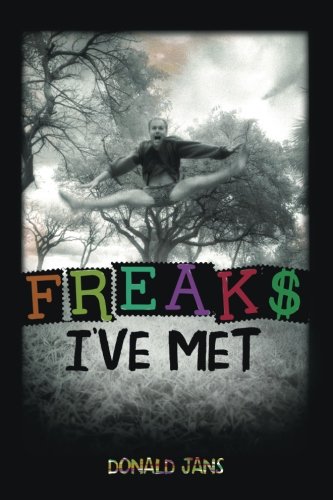
[J532.Ebook] PDF Ebook Freaks I've Met, by Donald Jans

PDF Ebook Freaks I've Met, by Donald Jans

Based upon the Freaks I've Met, By Donald Jans specifics that we provide, you could not be so confused to be right here as well as to be participant. Get currently the soft data of this book Freaks I've Met, By Donald Jans as well as wait to be yours. You saving could lead you to evoke the simplicity of you in reading this book Freaks I've Met, By Donald Jans Also this is forms of soft file. You could truly make better opportunity to obtain this Freaks I've Met, By Donald Jans as the recommended book to check out.

Freaks I've Met, by Donald Jans

Freaks I've Met, by Donald Jans


Freaks I've Met, by Donald Jans

PDF Ebook Freaks I've Met, by Donald Jans

Freaks I've Met, By Donald Jans. In undergoing this life, lots of people always aim to do as well as obtain the finest. New knowledge, experience, lesson, and every little thing that could enhance the life will be done. However, lots of people often feel perplexed to obtain those points. Feeling the limited of experience and also sources to be much better is one of the lacks to have. Nonetheless, there is an extremely basic point that can be done. This is just what your teacher constantly manoeuvres you to do this one. Yeah, reading is the response. Reading an e-book as this Freaks I've Met, By Donald Jans as well as various other recommendations can enhance your life top quality. How can it be?

Even the cost of a book Freaks I've Met, By Donald Jans is so inexpensive; many individuals are really stingy to establish aside their cash to acquire guides. The other reasons are that they feel bad and also have no time at all to head to the e-book company to look the publication Freaks I've Met, By Donald Jans to check out. Well, this is contemporary age; a lot of e-books could be got quickly. As this Freaks I've Met, By Donald Jans and a lot more books, they can be obtained in quite quick ways. You will not have to go outside to obtain this book Freaks I've Met, By Donald Jans

By seeing this web page, you have actually done the best staring factor. This is your start to pick the e-book Freaks I've Met, By Donald Jans that you really want. There are lots of referred books to review. When you would like to get this Freaks I've Met, By Donald Jans as your book reading, you could click the web link page to download Freaks I've Met, By Donald Jans In couple of time, you have actually possessed your referred publications as yours.

Due to this e-book Freaks I've Met, By Donald Jans is sold by on-line, it will reduce you not to publish it. you could get the soft file of this Freaks I've Met, By Donald Jans to save money in your computer system, kitchen appliance, as well as a lot more devices. It relies on your desire where as well as where you will check out Freaks I've Met, By Donald Jans One that you need to consistently remember is that reviewing e-book Freaks I've Met, By Donald Jans will never finish. You will have willing to review various other publication after finishing a book, and it's constantly.

Freaks I've Met, by Donald Jans

Spokane, Washington, is nearly perfect for most people, but Jack Fitzpatrick is not one of them. Hours after graduation and armed with his final paycheck from his nemesis, Mrs, Pohlkiss, Jack heads for Southern California determined to prove that money does buy happiness. Thanks to a lucky run-in with a talent agent a few weeks earlier, Jack has loftier (and more lucrative) dreams than minimum wage in the basement of Nordstrom's. But once there, he learns that lofty dreams are a dime a dozen in the City of Angels. Broke, barely scraping by, and hating his life as a temp, L.A. is definitely not what Jack expected. But that doesn't mean he is going to lay down and give up--not yet. After reading “Best Paying Jobs of 1987” in Newsweek magazine, he decides to go after the only one he thinks he has a shot at: institutional bond broker. Once frustrated that his dazzling lack of experience keeps getting in the way, Jack is ecstatic to land a job at Freedom Capital, a no-name firm with a hire anybody mentality. Pumped to be on his way to his first few million, Jack eagerly engages in the challenged ethics of his new employer. When a series of innocent events lands him in prison, he’s sure things can’t get any worse. He would be wrong. Funny, scathing and over-the-top, "Freaks I've Met" is an adventure so unlike any other, it must be totally true.

  • Sales Rank: #142879 in Books
  • Brand: Jans Donald Henry
  • Published on: 2015-05-01
  • Original language: English
  • Number of items: 1
  • Dimensions: 9.00" h x .52" w x 6.00" l, .69 pounds
  • Binding: Paperback
  • 208 pages
Features
  • Freaks I ve Met

From Kirkus Reviews
A Spokane college graduate searches for wealth and fame in LA but finds only a string of dead-end jobs and outlandish individuals in Jans’ witty debut drama. In 1987, Jack Fitzpatrick’s plans to be rich and famous are off to a good start. Beverly Hills talent agent Alain Michaels tells Jack that he can find him work as a model in California. But when the modeling gig doesn’t pan out, Jack’s more determined than ever to make it on his own instead of returning to Spokane. He stays with a friend and runs through a few temp jobs, finally finding success as a bond broker. Jack makes good money at bond firm Freedom Capital Markets, but he soon realizes that he wants to share it with someone.The author’s Bukowski-esque tale has an ordinary protagonist immersed in extraordinary circumstances. Jack’s escape from his Spokane roots, for instance, is sublimely epitomized by Mrs. Pohlkiss, an affluent neighbor who looks down on him and who’s immediately on his mind at the slightest sign of failure. Likewise, Jack, while certainly not naïve, is faced with obstacles he’s never considered—complacency or boredom with a job and a revolving door of co-workers, some of them friends who leave too soon and a shady few who are considerably less friendly. Jack’s nonchalant narration manages to take the bite out of the story’s darker bits, like the protagonist’s eventual arrest and incarceration, as well as the toilet humor. Other characters, too, have their comic moments: Noah’s wife, a millionaire by inheritance, still demands that her husband get a job. Jans wisely saves details about Jack’s dog until later in the story. Jack’s goal continually changes throughout the novel—he wants fame, success, and maybe even a wife—but what he truly craves is finally answered in a satisfying coda that’s both over-the-top and a little endearing. An engrossing but tongue-in-cheek drama that, even at its most dramatic, will leave readers smiling

Review
An engrossing but tongue-in-cheek drama that, even at its most dramatic, will leave readers smiling---Kirkus Reviews

In Freaks I’ve Met, Donald Jans delivers a riotous bromance centering a recent college graduate with a heart for, and potentially even of, gold. Irreverent prose and wild situations make for entertaining reading in a novel that, despite the unapologetic vices of its narrator, works its way toward a revelation.
All twentysomething Jack wants is out of Spokane, but he’ll take a fortune and riches with his escape if they’re available. Chasing promises from a sleazy modeling agent, he winds up in Los Angeles, where dazzling promises dissipate with disappointing speed. But Jack is determined to grab onto some late-eighties wealth, and so charms his way into work as a stockbroker, where morals are always secondary to the sale.
This is a tale replete with sex, substance abuse, dishonesty and people-using, but somehow the narrator, Jack, maintains charm throughout. Jack’s likability is all the more surprising when one considers the situations he gets himself into—landing friends in trouble with their indulgent mothers, unthinkingly rattling off racial stereotypes while dating girls meant to expand his romantic horizons, and flirting with illegality on the trading floor. But even at his most shameless and vulgar, there’s an “aww shucks” quality to Jack’s speech that’s appealing.
Jack cultivates naïveté, seemingly determined to grab ahold of whatever glitters, consequences be damned: “I needed a job like … the stockbroker. He was a pretty cool guy with a huge house and a pool, and he sure seemed to be home an awful lot to enjoy it. I guess that was mostly during his FBI investigation, but still, his job seemed perfect.” Jack’s crash landing can be sensed coming long before the scene for it is set; but it seems Jack knows it’s coming, too, and is resigned to enjoying the ride for as long as it lasts.
The comedic flavor of Freaks I’ve Met is certain to appeal to those who remember the fecklessness of youth with any degree of longing, just as Jack’s comeuppance is likely to serve as a reminder of why such free-wheeling is not always well advised. There’s a degree of warning in this endlessly fun novel that removes it from the realm of strictly guilty pleasures.
There’s so much fun to be had here that readers are unlikely to begrudge Jans a bit of final cheesiness. Freaks I’ve Met is an entertaining, raucous novel with a bit of a lesson at its heart.


Midwest Book Review Freaks I've Met features a college graduate who is tempted into the money-hungry world of finance, only to land in jail, and follows Jack Fitzpatrick in his move from Washington to California in search of riches. While he's on a mission to prove that he can become happy through achieving wealth, Jack finds that life hands him more than one lemon and his job-hopping leads to increasing ethical dilemmas in the process. Freaks I've Met is a satisfying tour de farce that is surprisingly humorous, pointed, and fun as well as a serious, pointed survey of the institutional bond market, based on author Donald Jans' own background in this financial sector. It perfectly captures the dreams of new college grads who might think success is in the palm of their hands, only to field a host of challenges handed down by tough choices about the best ways to live. It's unexpected to discover a sense of fun in bond trading, but Freaks I've Met does a fine job of juxtaposing humor and serious issues; all couched in a lively story.

Foreword Reviews-
Freaks I’ve Met is an entertaining, raucous novel with a bit of a lesson at its heart.

In Freaks I’ve Met, Donald Jans delivers a riotous bromance centering a recent college graduate with a heart for, and potentially even of, gold. Irreverent prose and wild situations make for entertaining reading in a novel that, despite the unapologetic vices of its narrator, works its way toward a revelation.

All twenty-something Jack wants is out of Spokane, but he’ll take a fortune and riches with his escape if they’re available. Chasing promises from a sleazy modeling agent, he winds up in Los Angeles, where dazzling promises dissipate with disappointing speed. But Jack is determined to grab onto some late-eighties wealth, and so charms his way into work as a stockbroker, where morals are always secondary to the sale.

This is a tale replete with sex, substance abuse, dishonesty and people-using, but somehow the narrator, Jack, maintains charm throughout. Jack’s likability is all the more surprising when one considers the situations he gets himself into—landing friends in trouble with their indulgent mothers, unthinkingly rattling off racial stereotypes while dating girls meant to expand his romantic horizons, and flirting with illegality on the trading floor. But even at his most shameless and vulgar, there’s an “aww shucks” quality to Jack’s speech that’s appealing.

Jack cultivates naiveté, seemingly determined to grab ahold of whatever glitters, consequences be damned: “I needed a job like … the stockbroker. He was a pretty cool guy with a huge house and a pool, and he sure seemed to be home an awful lot to enjoy it. I guess that was mostly during his FBI investigation, but still, his job seemed perfect.” Jack’s crash landing can be sensed coming long before the scene for it is set; but it seems Jack knows it’s coming, too, and is resigned to enjoying the ride for as long as it lasts.

The comedic flavor of Freaks I’ve Met is certain to appeal to those who remember the fecklessness of youth with any degree of longing, just as Jack’s comeuppance is likely to serve as a reminder of why such free-wheeling is not always well advised. There’s a degree of warning in this endlessly fun novel that removes it from the realm of strictly guilty pleasures.

There’s so much fun to be had here that readers are unlikely to begrudge Jans a bit of final cheesiness. Freaks I’ve Met is an entertaining, raucous novel with a bit of a lesson at its heart.

About the Author
Chartered Financial Analyst and Gonzaga University alumnus--survived more than twenty years in the instituional bond market and encounters with all kinds of freaks. The author of several screenplays, he is currently working on his second novel. He lives in Portland, Oregon, with his two children.

Most helpful customer reviews

4 of 4 people found the following review helpful.
Hilarious!
By muffiemae
I wish I could give this book 10 stars! It was hilarious and insightful, and the author no doubt drew from his own experience in the bond market. The book could have a subtitle "Expose of the Bond Market." (And all the stock brokers and financial finaglers on Wall Street are crooks without a conscience as well.)

Great metaphors had me laughing out loud. And it's quite an education for those who are unfamiliar with how the bond/stock market really works. Do read this book!

Last but not least, there were NO grammatical errors. Big congratulations to the author! (Well, there was one but it was in a quotation, and it's the way most people "talk.")

3 of 3 people found the following review helpful.
Enjoyed this book
By From Missouri
Enjoyed this book. Follows the main character in the first few years of life after college, an adjustment period for sure and brought back some memories. Chapters are relatively short, a few pages, so goes at a pretty fast clip. The author was in the investment business for some years and if you're at all familiar with that industry you will recognize some of the 'characters' - not specific people but classic stereotypes. If you've spent some time in the biz yourself you will have met most of these folks, I promise. I recommend this book, it's a good, fun, and entertaining read.

2 of 2 people found the following review helpful.
I recognized people like those he encountered and sometimes wished I could have ...
By DL Brush
Anyone looking for book which will make you laugh, think and identify with a charming protagonist, then this book should definitely top your list! I'm not a 20-something young man--never have been, never will be--and know next to nothing about the financial world, yet I could identify with the protagonist, Jack. I could laugh and shake my head along with him at the freaks he met along his journey to prove himself. I recognized people like those he encountered and sometimes wished I could have reacted with such wit to them. In fact, more than once, I laughed out loud at the situations he found, or more often than not, put himself in.

Jans' book made me think, as well as laugh. It gave me a glimpse into the ins and outs of high stakes trading, the ramifications of the greed of the late 1980s at both a personal and societal level. Don't get me wrong, this isn't a cautionary tale filled with angst and ire, nor does it ever preach. It gave a human face, though, to the people involved at the very outside of a complex web. No matter what things I might have found off putting about Jack, as a reader, I couldn't help but root for him.

Finally, Freaks I've Met, brought me a character that I cared about. Jack could easily have been a stock character or a morally bankrupt anti-hero, but Donald Jans gave me something more. He created a real person, a mostly likable person, with enough depth for readers to care about him, but not so much as to bog the narrative down. I wasn't a young man, but I was young (long, long ago) and could identify with the hope and exasperation, the fear and the fun, the independence so yearned for and the dependence on others young folks are loathe to admit.
The narrative wrapped things up well enough with one of the most hilarious endings I've ever read. (I seriously had to put the book down for a minute to gather myself before I could continue. And if some of you read the ending first--shame on you but you will genuinely rob yourself. So don't. Just don't.) I felt good for Jack at the end; I really did. But you know what? I really wish he wasn't a fictional character because I wouldn't mind if he dropped me a line to let me know how it's going and if he's met any more freaks.

See all 83 customer reviews...

Freaks I've Met, by Donald Jans PDF
Freaks I've Met, by Donald Jans EPub
Freaks I've Met, by Donald Jans Doc
Freaks I've Met, by Donald Jans iBooks
Freaks I've Met, by Donald Jans rtf
Freaks I've Met, by Donald Jans Mobipocket
Freaks I've Met, by Donald Jans Kindle

Freaks I've Met, by Donald Jans PDF

Freaks I've Met, by Donald Jans PDF

Freaks I've Met, by Donald Jans PDF

Senin, 10 Januari 2011

[D740.Ebook] Fee Download Fatal Reunion, by Claire McNab

Fee Download Fatal Reunion, by Claire McNab

Be the very first to get this book now and get all factors why you require to review this Fatal Reunion, By Claire McNab Guide Fatal Reunion, By Claire McNab is not just for your obligations or requirement in your life. E-books will certainly always be an excellent friend in whenever you review. Now, allow the others understand about this page. You can take the benefits and share it also for your buddies as well as people around you. By in this manner, you can really get the definition of this book Fatal Reunion, By Claire McNab beneficially. What do you consider our suggestion here?

Fatal Reunion, by Claire McNab

Fatal Reunion, by Claire McNab


Fatal Reunion, by Claire McNab

Fee Download Fatal Reunion, by Claire McNab

Fatal Reunion, By Claire McNab. Offer us 5 mins and we will certainly show you the most effective book to read today. This is it, the Fatal Reunion, By Claire McNab that will certainly be your best selection for better reading book. Your 5 times will certainly not spend wasted by reading this site. You can take the book as a source to make better concept. Referring guides Fatal Reunion, By Claire McNab that can be situated with your requirements is sometime challenging. But here, this is so very easy. You could find the very best thing of book Fatal Reunion, By Claire McNab that you could review.

Reviewing, once again, will give you something new. Something that you do not know then revealed to be populared with guide Fatal Reunion, By Claire McNab notification. Some expertise or session that re obtained from checking out books is vast. A lot more publications Fatal Reunion, By Claire McNab you check out, more knowledge you get, as well as more chances to always love reviewing e-books. Due to this reason, reviewing book should be begun with earlier. It is as just what you could acquire from the e-book Fatal Reunion, By Claire McNab

Obtain the perks of reading routine for your life style. Book Fatal Reunion, By Claire McNab notification will certainly always connect to the life. The reality, expertise, scientific research, health, faith, home entertainment, and a lot more could be located in composed publications. Many writers provide their encounter, scientific research, research study, and all things to show you. Among them is through this Fatal Reunion, By Claire McNab This book Fatal Reunion, By Claire McNab will provide the required of notification and also declaration of the life. Life will be finished if you understand a lot more points through reading e-books.

From the description above, it is clear that you have to read this publication Fatal Reunion, By Claire McNab We offer the on the internet book entitled Fatal Reunion, By Claire McNab right here by clicking the link download. From shared e-book by online, you can offer more benefits for many individuals. Besides, the readers will be also easily to obtain the preferred publication Fatal Reunion, By Claire McNab to review. Locate the most preferred and also required publication Fatal Reunion, By Claire McNab to read now and below.

Fatal Reunion, by Claire McNab

After a tumultuous investigation that ended with a surprising and welcome new relationship, Detective Inspector Carol Ashton seems settled. Though she is in the closet to protect her career, life with Sybil is good - until the call that pulls Carol back to the woman who left her three years ago by returning to her husband.

But now Christine's husband is dead and she's desperate for Carol's help. Though not assigned to the case, Carol agrees. Quickly drawn into Christine's world of high spending and low values, she finds herself at a personal and professional crossroads - and any choice may be her last.

Originally published by The Naiad Press in 1989.

  • Sales Rank: #1748425 in Books
  • Published on: 2011-10-10
  • Binding: Paperback
  • 184 pages

Most helpful customer reviews

3 of 3 people found the following review helpful.
A good quick read
By S. Calhoun
"Fatal Reunion" is the second installment in the Carol Ashton detective series. The reader is introduced to Christine, Carol's ex-lover who was briefly mentioned at the end of "Lessons in Murder." Although Carol is not officially on the case, Christine begs for her to help prove her innocence when her husband is found murdered. But as Carol and Christine become re-acquainted after three years of separation and a bad breakup they both realize that their feelings and desires have not completely disappeared causing significant strains in Carol's new relationship with Sybil. Carol finds herself at a fork in the road concerning which woman she wants. In addition Carol remains in the closet in fear that her lesbian relationships will be revealed and her professional career jeopardized.
I enjoyed this book because it provided insights into the character of Carol pertaining to her motivations in her personal life that were absent in "Lessons in Murder." The detective work is good but the book itself is a little too thin. This isn't my favorite lesbian detective series but that won't stop me from continuing reading subsequent books in this series. I am anxious to see the relationship between Carol and Sybil progress further.

3 of 3 people found the following review helpful.
You won't put this one down until you turn the last page.
By A Customer
This second book in the Carol Ashton series provides some background into her past lovelife and how the past has affected her ability to love as well as her child's custody. In this novel we meet her former lover, Christine who still has a hold on Carol's heart. This causes obvious strain with Carol's lover, Sybil. In the course of her investigation, Carol must come to terms with her past with Chris in order to solve a murder case that seems open and shut. All the while, she must reconcile her feelings for Sybil as well as for Christine. This book is one that you just can't put down. From the moment Christine enters the picture until the very last page, the questions about what will happen abound. It is a delightful read that proves that Claire McNab has a handle on the complexities of her characters and develops well what "makes them tick". I can't wait to read #3.

3 of 4 people found the following review helpful.
OK for a couple hours mundless reading.
By Amazon Customer
I enjoyed reading Fatal Reunion. It was a nice time killer but not a book I would particularly read again. This is not to say I don't plan on reading the third book in the series. Just that the author walks the reader through the mystery from the first murder to the arrest. I am happy to say Sybil made it into the second book and the scenes between her and Carol adjusting to life together were nice.

See all 6 customer reviews...

Fatal Reunion, by Claire McNab PDF
Fatal Reunion, by Claire McNab EPub
Fatal Reunion, by Claire McNab Doc
Fatal Reunion, by Claire McNab iBooks
Fatal Reunion, by Claire McNab rtf
Fatal Reunion, by Claire McNab Mobipocket
Fatal Reunion, by Claire McNab Kindle

Fatal Reunion, by Claire McNab PDF

Fatal Reunion, by Claire McNab PDF

Fatal Reunion, by Claire McNab PDF

Minggu, 09 Januari 2011

[Z513.Ebook] PDF Download German Easy Reader: Super 500 (German Edition), by Brian Smith

PDF Download German Easy Reader: Super 500 (German Edition), by Brian Smith

Based on some encounters of many people, it remains in fact that reading this German Easy Reader: Super 500 (German Edition), By Brian Smith can help them to make better choice as well as offer more experience. If you intend to be one of them, allow's acquisition this publication German Easy Reader: Super 500 (German Edition), By Brian Smith by downloading the book on web link download in this site. You can obtain the soft data of this publication German Easy Reader: Super 500 (German Edition), By Brian Smith to download and also deposit in your available electronic tools. Exactly what are you waiting for? Let get this publication German Easy Reader: Super 500 (German Edition), By Brian Smith on-line as well as review them in at any time and also any type of area you will certainly read. It will not encumber you to bring heavy book German Easy Reader: Super 500 (German Edition), By Brian Smith inside of your bag.

German Easy Reader: Super 500 (German Edition), by Brian Smith

German Easy Reader: Super 500 (German Edition), by Brian Smith


German Easy Reader: Super 500 (German Edition), by Brian Smith

PDF Download German Easy Reader: Super 500 (German Edition), by Brian Smith

German Easy Reader: Super 500 (German Edition), By Brian Smith. Exactly what are you doing when having downtime? Talking or scanning? Why don't you attempt to check out some book? Why should be reading? Reviewing is just one of fun and satisfying activity to do in your leisure. By checking out from lots of resources, you could find new info as well as encounter. Guides German Easy Reader: Super 500 (German Edition), By Brian Smith to read will certainly be various beginning with clinical e-books to the fiction e-books. It indicates that you could check out guides based on the need that you wish to take. Naturally, it will be various as well as you can check out all book kinds whenever. As below, we will certainly show you a book must be checked out. This publication German Easy Reader: Super 500 (German Edition), By Brian Smith is the option.

By reading German Easy Reader: Super 500 (German Edition), By Brian Smith, you can understand the expertise and also points even more, not just about just what you receive from individuals to individuals. Reserve German Easy Reader: Super 500 (German Edition), By Brian Smith will certainly be much more relied on. As this German Easy Reader: Super 500 (German Edition), By Brian Smith, it will truly give you the good idea to be effective. It is not only for you to be success in specific life; you can be effective in everything. The success can be started by recognizing the standard expertise and also do actions.

From the combo of understanding and actions, an individual can boost their ability as well as capability. It will certainly lead them to live as well as work far better. This is why, the students, employees, or perhaps companies should have reading habit for books. Any kind of publication German Easy Reader: Super 500 (German Edition), By Brian Smith will give specific expertise to take all perks. This is what this German Easy Reader: Super 500 (German Edition), By Brian Smith informs you. It will certainly include more understanding of you to life and function far better. German Easy Reader: Super 500 (German Edition), By Brian Smith, Try it and prove it.

Based on some encounters of many people, it is in fact that reading this German Easy Reader: Super 500 (German Edition), By Brian Smith can help them making far better choice and also offer even more encounter. If you want to be one of them, let's acquisition this book German Easy Reader: Super 500 (German Edition), By Brian Smith by downloading and install the book on link download in this website. You could obtain the soft file of this book German Easy Reader: Super 500 (German Edition), By Brian Smith to download as well as deposit in your offered electronic devices. Exactly what are you awaiting? Allow get this book German Easy Reader: Super 500 (German Edition), By Brian Smith on-line as well as review them in whenever as well as any kind of place you will certainly read. It will not encumber you to bring heavy book German Easy Reader: Super 500 (German Edition), By Brian Smith inside of your bag.

German Easy Reader: Super 500 (German Edition), by Brian Smith

This easy reader is based on the 500 most common words in German. Knowing these will enable you to understand 80% of average German texts.
The original German text is side by side with an English translation.
All new words are introduced with an English translation in the text.
Numerous pictures illustrate new words.
Many verb tables show you how to conjugate new verbs correctly.
MP3 recording of the German text in each unit is available for FREE as download.
13 simple stories to practise and learn in an easy and fun way.

This book is for beginners. If you are more advanced check out 'German Pre-Intermediate Reader Super 1000' by the same author.

www.briansmith.de

  • Sales Rank: #207129 in eBooks
  • Published on: 2016-02-26
  • Released on: 2016-02-26
  • Format: Kindle eBook

About the Author
Brian Smith was born in Germany in 1972. Son of a German mother and a British father he grew up having both German and English as his native languages. After completing his education in Germany, he moved in 1995 to Hong Kong where he spent twenty years teaching English and German. He has also learned other languages including French, Latin and Cantonese. His extensive teaching practice with people of different ages and nationalities, and his own experience in studying foreign languages have given him a unique appreciation of how best to help learners make progress. He has already written several books including a series of children’s stories describing the magical adventures of two small boys.

Most helpful customer reviews

15 of 16 people found the following review helpful.
At first this book stuck me as ridiculously easy. In a single sitting
By J. Kevin White
At first this book stuck me as ridiculously easy. In a single sitting, I read through chapter after chapter of the German text without looking at the parallel English translation. Then, I decided to read the parallel English translation to see if I could mentally put it back into German exactly how it appears on the page. This exercise showed me instantly what grammar I actually knew as opposed to what I could merely recognize. There was a big gap. If you use this book right, it will help you bridge that gap. The book is chuck full of grammar, and you will learn it without even realize you are learning it. The free online recording of all the German in the book also is a great feature. If I could give the book 6 stars, I would.

7 of 7 people found the following review helpful.
This is really great. I talked to some German friends and asked ...
By Rebecca
This is really great. I talked to some German friends and asked if the author's accent is good. (There is a link for the audio that you can download or listen to online.) They said it was, and that he was really slowing down and articulating well too. I am a beginner and this seems to be just right. I have been enjoying it so far.

5 of 5 people found the following review helpful.
Excellent Study Companion
By Amazon Customer
This book has given me just what I was seeking in my attempt to gain some basic knowledge of German. While it is written in a necessarily simple format, the book provides greater insight into the sentence structure and vocabulary of German than any other method I have used in my studies. The accompanying reading of the passages on the author's site adds to the books usefulness. I am reading and re-reading this book. When I feel a reasonable level of accomplishment, I look forward to buying the next level books written by the author.

See all 12 customer reviews...

German Easy Reader: Super 500 (German Edition), by Brian Smith PDF
German Easy Reader: Super 500 (German Edition), by Brian Smith EPub
German Easy Reader: Super 500 (German Edition), by Brian Smith Doc
German Easy Reader: Super 500 (German Edition), by Brian Smith iBooks
German Easy Reader: Super 500 (German Edition), by Brian Smith rtf
German Easy Reader: Super 500 (German Edition), by Brian Smith Mobipocket
German Easy Reader: Super 500 (German Edition), by Brian Smith Kindle

German Easy Reader: Super 500 (German Edition), by Brian Smith PDF

German Easy Reader: Super 500 (German Edition), by Brian Smith PDF

German Easy Reader: Super 500 (German Edition), by Brian Smith PDF

Sabtu, 08 Januari 2011

[I255.Ebook] Ebook Free I, Cyborg, by Kevin Warwick

Ebook Free I, Cyborg, by Kevin Warwick

Guide I, Cyborg, By Kevin Warwick will certainly still give you positive value if you do it well. Completing guide I, Cyborg, By Kevin Warwick to check out will not come to be the only goal. The goal is by getting the good value from the book up until completion of guide. This is why; you need to learn even more while reading this I, Cyborg, By Kevin Warwick This is not only how quickly you check out a book as well as not only has the number of you finished guides; it is about what you have actually obtained from guides.

I, Cyborg, by Kevin Warwick

I, Cyborg, by Kevin Warwick


I, Cyborg, by Kevin Warwick

Ebook Free I, Cyborg, by Kevin Warwick

Why must select the hassle one if there is simple? Obtain the profit by acquiring guide I, Cyborg, By Kevin Warwick right here. You will obtain various way to make a deal and obtain the book I, Cyborg, By Kevin Warwick As understood, nowadays. Soft file of the books I, Cyborg, By Kevin Warwick end up being incredibly popular amongst the viewers. Are you among them? As well as below, we are providing you the new compilation of ours, the I, Cyborg, By Kevin Warwick.

Getting the books I, Cyborg, By Kevin Warwick now is not type of tough means. You could not only going for e-book store or collection or borrowing from your friends to read them. This is a very simple way to precisely get guide by on-line. This on-line publication I, Cyborg, By Kevin Warwick can be one of the alternatives to accompany you when having spare time. It will certainly not waste your time. Believe me, the publication will certainly show you new thing to check out. Simply spend little time to open this online e-book I, Cyborg, By Kevin Warwick as well as read them anywhere you are now.

Sooner you obtain the book I, Cyborg, By Kevin Warwick, faster you can enjoy reviewing the publication. It will certainly be your resort to maintain downloading the publication I, Cyborg, By Kevin Warwick in given link. By doing this, you could truly making a decision that is worked in to get your own publication online. Right here, be the very first to obtain the book entitled I, Cyborg, By Kevin Warwick as well as be the first to recognize exactly how the author indicates the message as well as expertise for you.

It will certainly have no doubt when you are going to select this publication. This motivating I, Cyborg, By Kevin Warwick publication could be read completely in certain time depending on how usually you open and read them. One to keep in mind is that every publication has their own production to get by each visitor. So, be the excellent reader as well as be a far better individual after reviewing this publication I, Cyborg, By Kevin Warwick

I, Cyborg, by Kevin Warwick

Now available for the first time in America, I, Cyborg is the story of Kevin Warwick, the cybernetic pioneer advancing science by upgrading his own body. Warwick, the world's leading expert in cybernetics, explains how he has deliberately crossed over a perilous threshhold to take the first practical steps toward becoming a cyborg--part human, part machine--using himself as a guinea pig and undergoing surgery to receive technological implants connected to his central nervous system. Believing that machines with intelligence far beyond that of humans will eventually make the important decisions, Warwick investigates whether we can avoid obsolescence by using technology to improve on our comparatively limited capabilities. Warwick also discusses the implications for human relationships, and his wife's participation in the experiments. Beyond the autobiography of a scientist who became, in part, a machine, I, Cyborg is also a story of courage, devotion, and endeavor that split apart personal lives. The results of these amazing experiments have far-reaching implications not only for e-medicine, extra-sensory input, increased memory and knowledge, and even telepathy, but for the future of humanity as well.

  • Sales Rank: #2807091 in Books
  • Published on: 2004-07-19
  • Original language: English
  • Number of items: 1
  • Dimensions: 9.00" h x .80" w x 6.00" l, 1.15 pounds
  • Binding: Paperback
  • 320 pages

Most helpful customer reviews

0 of 0 people found the following review helpful.
Love the book
By Paul
Love the book. It got me into robotics and the bio hacking movement. Book came fast and in great condition.

28 of 31 people found the following review helpful.
Mostly about the guy, not much about the experiment
By Mindy Machanic
Don't bother. This guy is a systems and process engineer, a robotics genius - and a megalomaniac who thinks he does real science. Surprise! He went to do his experiment and discovered that there are rules to real science, like Human Subjects Protection laws. This is a guy who thinks that if you feed each group of 10 schoolkids a different breakfast for a month and find a 3 point difference in IQ in the group that ate bacon sandwches, that proves that bacon raises IQ. He mixes up his psychological, biological and philosophical concepts, mostly because he really doesn't seem to have much grounding beyond the logic of systems - and his own desire to become the first cyborg. That huge book, and 95% is "me, I, me, I" about his papers, his trips, his projects, his jobs, his TV appearances, his publicity.

The experiment isn't much. Big deal, he implanted a small array of electrodes in his lower arm with some wires attached, wore it around for 3 months, connected it to a computer once in a while, and then he ran some simple tests on it, the most important of which, in my estimation, was making the virtual hand work at a distance by moving his own hand - a nice future worth developing for robotics working in dangerous environments, something that didn't seem to have occured to him. The part about sending electrical currents from his hand to his wife's hand was interesting, but he imbued it with semi-mythical power. My question is, does it count as brain-to-brain electrical communication if the nerve stimulation doesn't pass through the brain but only works in the arm and spinal column, or just the arm to the implant? Issues he didn't consider because of his limited knowledge in anatomy, neuroanatomy (he had to open a textbook at every step of his experiment), etc.

I think cyborgs are coming, and I think neural control of objects is a good thing. I want to be able to write and make art from my brain directly, when that is possible, and would even be willing to volunteer to help along the way. But I don't think Warwick counts as the first real cyborg. He wasn't even the first implant - the first and second implants were done in 1996 by a group in Atlanta, headed up by Philip Kennedy (Science News, 1/29/05, p. 73). I think Warwick's effort was an engineer-being-a-science-dilettante publicity-hound's quick-and-dirty effort to grab a lot of ink and a Nobel Prize, which he thought to deny in the book - why bother to mention it if you're not thinking about it?

Read the news stories about his experiments, they get to the point faster. Read his books about robotics, which is where his expertise lies, if you're interested in his real work and significant ideas. Read other people's work on cyborgs. Check out the good work being done with blind people and paraplegics by different groups, work that goes into serious scientific looks at what Warwick just played with. They just don't write self-aggrandizing books about things, they go through peer review first!

3 of 6 people found the following review helpful.
Warwick's efforts in the field of AI are laughable
By Kurt Godel
First came across Kevin Warwick with his "In the Mind of the Machine" some years back. It is cringingly badly written, full of egotistical self-reference, and mainly downright silly. Apparently Warwick's new machines will take control of their human masters and turn them into toiling slaves condemned to long hours of manual labour. This thesis is obviously absurd - what is the point in expending resources on a species that is hopelessly inept at an activity in which machines excel ?

Warwick's obsession with stunts like embedding a chip in his arm so that his every movement can be tracked begs the question : "would I ever want to know where Kevin Warwick is at any moment in time?".
Avoid

See all 5 customer reviews...

I, Cyborg, by Kevin Warwick PDF
I, Cyborg, by Kevin Warwick EPub
I, Cyborg, by Kevin Warwick Doc
I, Cyborg, by Kevin Warwick iBooks
I, Cyborg, by Kevin Warwick rtf
I, Cyborg, by Kevin Warwick Mobipocket
I, Cyborg, by Kevin Warwick Kindle

I, Cyborg, by Kevin Warwick PDF

I, Cyborg, by Kevin Warwick PDF

I, Cyborg, by Kevin Warwick PDF